Fall 2023
Geos 220: Environmental History of the Southeast
Class times: T, Th 2:00-3:15
Saguaro Hall 225UA Statement
The University of Arizona resides on ancestral lands of the Tohono O’odham nation, where many today continuously reside in their ancestral land. We acknowledge the privilege it is to teach and learn in this region and we express our gratitude to the nation.
Current UA COVID Protocol
- Geos. 220 is currently listed as "in-person," so we will meet in-person beginning Tuesday, Aug. 22, and henceforth until instructed otherwise by the UA.
- Indoor classrooms, including Saguaro Hall 225, are currently signed for "masks recommended," so bring and wear a mask or not during indoor sessions of this course.
- Lectures will be Zoom accessible and recorded
- In the event of testing positive, follow these protocols for students.
Professor
Paul Sheppard
he, him, his
Lab. of Tree-Ring Research
sheppard @ ltrr.arizona.edu
office hours: MW 11:00-12:00
or by appointment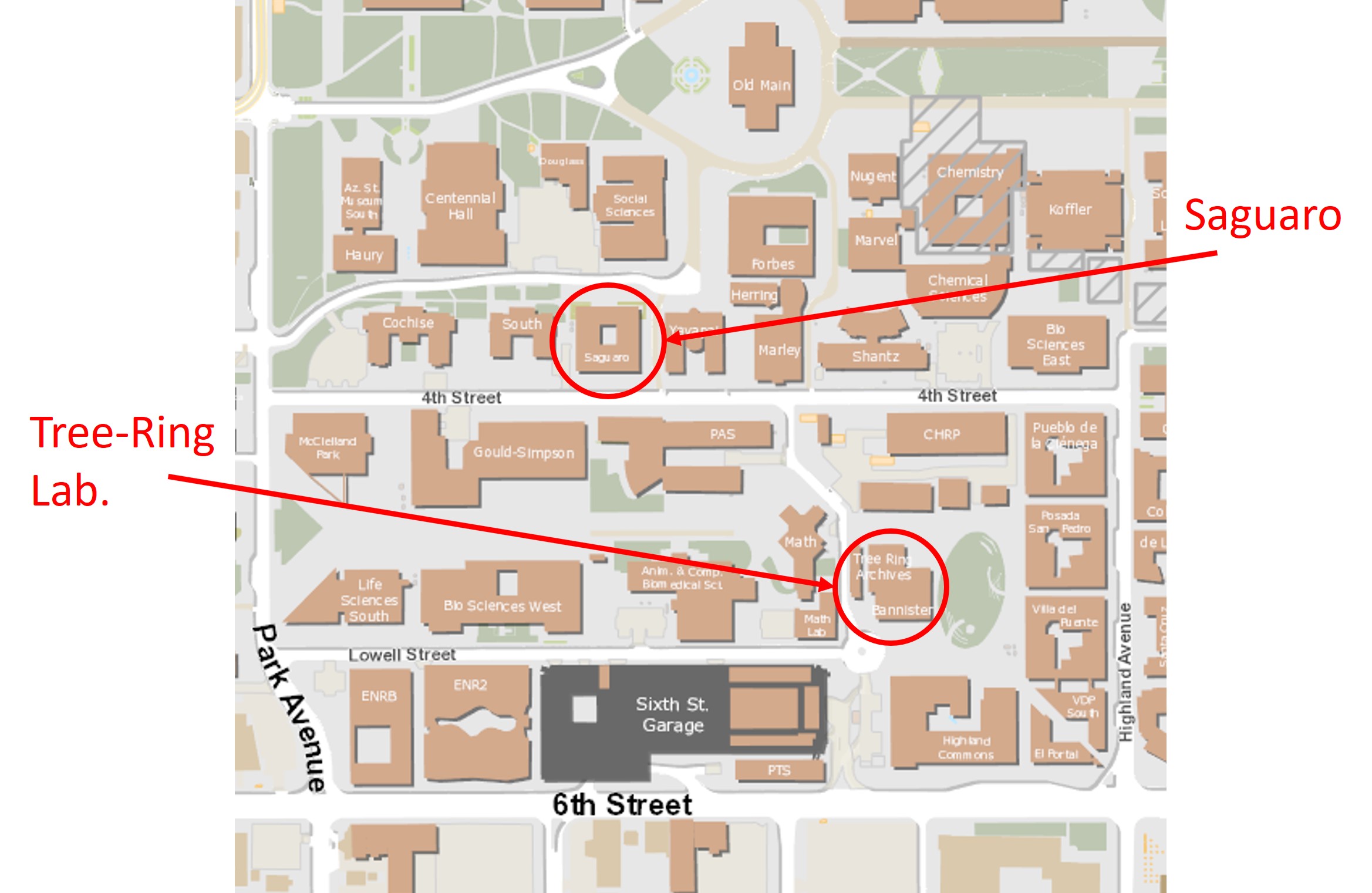
Course Objectives and Summary
- UA On-line catalog description for Geos. 220: Environmental and cultural history of the Southwest emphasizing discovery of the past using historical science techniques of tree-ring and packrat midden analyses and repeat photography.
- This course will cover several paleoenvironmental tools that have been involved extensively in reconstructing the natural and cultural history of the Southwest (as well as for other regions, too). They include:
- Tree rings
- Packrat middens
- Alluvial stratigraphy
- Repeat photography
- Historical documents
- Whereas the overall scope of this course encompasses broad time scales, its focus increases in detail as it moves from the distant to the recent past.
- Spatially, the greater Southwest includes most of Arizona and New Mexico as well as southeastern Utah, southwestern Colorado, and northern Mexico.
- This course has been described in detail in an article published in 2008 in the Journal of Geoscience Education. Click here to see it.
Expected Learning Outcomes
- Upon completion of this course, students should know:
- Basic geology and climatology of the American Southwest
- Techniques of dating and reconstruction of past environments
- Basic background information of environments of the American Southwest
- Past human interaction with environments in the American Southwest
- Current human interaction with environments in the American Southwest
- Students will research a major topic in human-environmental history of the American Southwest, culminating in an outline/essay or a storyboard/video (WRIT):
- WRIT: Students will demonstrate rhetorical awareness and writing proficiency by writing for a variety of contexts and executing disciplinary genre conventions of organization, design, style, mechanics and citation format while reflecting on their writing development
- Students will think critically every lecture (QNT):
- QNT: Students will demonstrate competency in working with numerical information by critically analyzing quantitative information, generating ideas that are supported by quantitative evidence, assessing the relevance of data and its associated implications in a variety of contexts, and communicating those ideas and/or associated interpretations using various formats (graphs, data tables, equations, oral presentations, or written reflections)
- Students who pass will fulfill gen-ed requirements for Exploring Perspectives in Natural Sciences (EPNAT):
- EPNAT: Students will identify the approaches and methodologies of Natural Scientists, using evidence to critically analyze questions and arguments, and consider contributions of this perspective to finding solutions to global and/or local challenges
Prerequisites
Please be sure that you have fulfilled the stated course prerequisites: two courses from Tier One, Natural Sciences (NATS 101, 102, 104).
UA General Education
- Geos. 220 is a General Education course. The UA on-line catalog states that General Education "helps University of Arizona graduates attain fundamental skills and a broad base of knowledge to respond effectively to a complex world." Geos. 220 is designed to fulfill this mandate.
Lecture Attendance
According to UA policy, students are expected to be regular and punctual in class attendance and to fully participate in courses. Students themselves are primarily responsible for attendance and class participation, so in this course attendance will not be monitored directly. In general, students who have attended lectures regularly and attentively have done well in this course, and vice versa. Click here for a Daily Wildcat op-ed piece about attending class, and click here for a Daily Wildcat cartoon about attending class.
The UA policy regarding absences for any sincerely held religious belief, observance or practice will be accommodated where reasonable. Assignments and/or exams may be fulfilled late after such absences.
The UA policy on absences preapproved by the UA Dean of Students (or dean's designee) will be honored. Assignments and/or exams may be fulfilled late after approved absences.
Content lectures have a graded exercise for critical thinking, which has the effect of taking attendance. After each lecture, go to D2L to do that day's exercise. The exact topic will be given in lecture. Critical thinking answers should be about 150 words, i.e., approximately a letter to the editor to the newspaper. Critical thinking will be evaluated on the basis of (1) providing an opinion backed up by data about the topic of the day and/or (2) considering multiple sides of the topic of the day. This exercise will be open on D2L from 3:30 to 11:59 PM on each lecture day that has a content lecture.
If you become ill with the flu, do not come to class until you have had no fever for 24 hours. You are responsible for contacting the instructor via email or phone as soon as you can to inform that you are ill. You are also responsible for any work missed while you are ill including assignments and exams.
Readings
- There is no textbook for the course, simply because no single book covers all of the varied content of this course while not including other, non-relevant topics.
- Instead of a single textbook, specific short readings will be available through this course web page. The reading assignments will be updated as needed.
- For some readings you will need the Adobe Reader application loaded onto your computer; that is pretty common these days and most university computers already have Adobe Reader installed. If you need it for your own computer, it's a free download from here: Adobe.
- For some readings you will need to know a password, which will be divulged in class. If you forget the password, contact the instructors.
- If you have problems with computer access to any readings or assignments, contact the instructors.
Course Web Page
- The url for the course web page is https://geos220.ltrr.arizona.edu/syllabus.
- This page contains the course syllabus plus links to notes for each lecture, homework assignments, quiz and exam dates, professor and TA contact information, and other important sites of interest.
- Students who access the web syllabus regularly during the semester do well in this course.
- Details of the writing assignments, quizzes, and/or outside activities are posted only on the web page and will not be distributed in class.
- For seeing your own scores, check in with D2L. BTW, here's a Daily Wildcat comic about D2L.
Writing Assignments
- UA gen-ed courses are expected to be writing intensive. There are short writing activities and one 1000-word essay in this course. The essay is intended to provide a chance for in-depth research on a complex topic, to foster critical thinking, and to allow practice for writing.
- The option exists to do a video documentary in lieu of an essay. Video production is fun and not difficult, and I teach it in all my courses. Video production requires voice over narration, so the video option has plenty of writing.
- This writing assignment will be broken into two parts:
- A topic-sentence outline OR a storyboard, the pre-video component of video production. Either way, cited references are expected, the more references the better, with a good mix of kinds of references (50% of grade)
- The written essay OR a video documentary, again with cited references (50% of grade)
- The grading of the outline/storyboard and essay/video will be based primarily on the effective use of research material and the overall quality of the writing. In general, the more reference material cited the better, and having just one topic in each paragraph, including an identifiable topic sentence, would be good. To improve writing quality, check out the free UA Writing Skills Improvement Program, which includes presentations on essay organization and paragraph structure, two areas of consistent difficulty in this course.
- As but an example of a video documentary that can satisfy our writing requirement, click here to see a short promo video for a Spring class I teach that also incorporates video documentaries.
Grading Guidelines
- Grading will be based on:
- critical thinking for each content lecture (D2L)
- 4 in-class quizzes (quick)
- 2 outside activities (easy and fun)
- 1 writing assignment (difficult)
- 3 exams (two midterms and a unit final exam with a comprehensive section)
- The distribution of credit and grading will be as follows:
Points Lecture critical thinking 50 (2 points per content lecture) Quizzes 80 (20 pts. each x 4 quizzes) Outside activities 50 (25 pts. each x 2 activities) Writing Assignment 200 (100 pts. each for outline/storyboard and essay/video) Midterm Exams 400 (200 pts. each x 2 exams) Final Exam
220 (200-pt. unit exam + 20-pt. comp.)
Total Points 1000
- Letter grades for the course will be determined from the percentage of earned points relative to the total, as follows:
900-1000 points (90 to 100%) = A 800-899 points (80 to 89%) = B 700-799 points (70 to 79%) = C 600-699 points (60 to 69%) = D below 600 points (60%) = E INCOMPLETES WILL BE CONSIDERED
ONLY FOR DIRE MEDICAL EVENTS
Exams and Other Graded Assignments
- Students can arrange with the instructors to take exams or quizzes in advance of scheduled dates if a valid reason for missing the scheduled dates is offered, such as: personal or family emergency, medical reasons, or UA Athletic obligations. If an exam or quiz is missed for unforeseen reasons (e.g., car accidents, sickness, emergencies, etc.), a make-up may be arranged within three days of the scheduled exam so long as proof of the necessity of the absence is provided (e.g., a written statement from a medical doctor, etc.).
- According to UA policy, the Final Exam MUST be taken during the scheduled time, unless you're unfortunate enough to have two at the same time or four on the same day, in which case please see the instructors.
- Completely missing exams or failing to do other graded essays and activities makes it difficult to succeed in any course. For example, if nothing is turned in for an assignment, a score of 0 will be entered for that grade.
- Students who are late on a graded assignment and don't have an acceptable excuse may turn in that assignment late for up to one week past the due date.
- However, the maximum score for late work will drop 10% after the due date.
- In short, it's best to turn in assignments on time, but if an assignment is late, it's still worth turning it in. After one week late, the door closes on assignments.
Extra Credit
Extra credit is offered, as follows:
- "Extra" credit does not mean "instead of" credit. That is, an extra credit score can be added to the final point total only by students who have turned in everything else. Click here for a cartoon on this concept.
- Only one extra credit assignment per student may be turned in.
- The extra credit project is to be a self-directed field trip to an approved prehistoric cultural site in the Southwest. The exact details of extra credit assignments can vary between students, and many possibilities exist near Tucson and throughout the Southwest:
- Near Tucson: Murray Springs mammoth kill site, Casa Grande, Tumacácori, Besh Ba Gowah, Tonto, Pueblo Grande, Mesa Grande.
- Farther away: Homolovi, Montezuma Castle and Well, Flagstaff Sinagua sites (Wupatki, Sunset Crater, and Walnut Canyon), Petrified Forest (with emphasis on Puerco Pueblo), Canyon de Chelly, Navajo Tsegi Canyon, Gila Cliff Dwellings, Pecos, Salinas Pueblos, and Coronado Kuaua.
- Extra credit trips need not last more than a day, and many could be a mere stop-in while traveling for other reasons. Spend at least a couple hours at the site learning about its prehistoric human-environment interactions.
- Four things will be required to earn extra credit points from a field trip:
- You must consult with Dr. Sheppard—in-person or by Zoom, not just by email—before your trip to be sure that your proposed trip is acceptable and to help prepare yourself to maximize your visit. For example, you will get recommended reference material to take with you. If you're already traveling and see some place appropriate to spend time at, do it and come see me after.
- Make a short (2 to 3 minutes is all) video showing lots of pictures of what you saw and explicitly linking your site to lecture topics of the course, the more the better. See this one by Paul as but an example of a trip video: Paul's Crack-in-Rock trip video. Discuss dates, how dating was done, where and how food and water were obtained, and when and why the people left. In the video credits, include at least TWO citations, one of material obtained at the site AND one of a published or web-based reference related to your site. Include narration and music in your video.
Note: If you hate the thought of making a video, and won't do an extra credit trip because of the video thing, then a written report is allowable.- Include in your video (report) an aerial photo of the site, with at least one comment of discussion about what is visible about the site from above.
- Include in your video (report) at least one picture of you at the site. Make it obvious that you were at the site.
- The total possible points available for extra credit is 50.
- Extra credit videos (reports) may be turned in at any time up until November 14, 2023, via D2L.
Code of Conduct
It is expected that we all—professors, TAs, and students alike—observe rules of common courtesy, such as:
- Adhere to the ABOR code of conduct and the UA Code of Academic Integrity.
- Adhere to the UA Threatening Behavior by Students Policy prohibiting threats of physical harm to any member of the University community, including to oneself.
- Adhere to the UA Policy creating and maintaining an environment free of discrimination and harassment.
- If you must arrive late or leave early (something not encouraged), please do so quietly.
- If you have a phone (who doesn't, besides the instructor?), please turn it off during class. If you must talk on your phone (does anyone talk on the phone anymore?) or text message someone during lecture, please do that outside of class.
- If you must read the newspaper (anyone?), tackle the Wildcat crossword and sudoku puzzles (anyone?), study for other courses (occasionally), sleep (lots), surf the web, update Facebook, Farmville, shop Ebay, play online poker, watch DVD movies, binge watch Thrones, or do anything else not related to this course during our lecture time, please do it elsewhere, not in class. These activities are obvious (click here for an example) and are officially considered disruptive. See here for a UA student opinion about surfing the web in class.
- Click here to see research saying people who multitask really aren't good at multitasking.
- There will be no racism, sexism, or violence tolerated in the classroom.
- Students are encouraged to share intellectual views and discuss freely the principles and applications of course materials. However, graded work/exercises must be the product of independent effort unless otherwise instructed. Students are expected to adhere to the UA Code of Academic Integrity as described in the UA General Catalog. See here.
- It's acceptable—even encouraged—to study together, of course. However, cheating will not be tolerated, including but not limited to:
- Copying work of others during exams or quizzes.
- Turning in work of others as your own, including work of students from past semesters.
- Plagiarism on papers. Click here for a definition of plagiarism.
- Special note on plagiarism: Some definitions of plagiarism imply that all that is necessary to avoid it is to put someone else's text in quotes and then cite the original source. While technically this may be true and acceptable in some academic settings, copying someone else's text (put in quotes or otherwise) is hereby NOT acceptable in this course. This includes text from fellow students or students from past semesters, published articles or newspapers, and web sites. In short: Citing yes, quoting no.
- Another note on plagiarism: If you'd like a fictional account of plagiarism, try Stephen King's, "Secret Window, Secret Garden," definitely a horror story. The movie, "Secret Window" with Johnny Depp and John Turturro, wasn't bad either.
- Students found cheating on any assigned work will receive a score of 0 for that assignment.
UA Nondiscrimination and Anti-Harassment Policy
- The University of Arizona is committed to creating and maintaining an environment free of discrimination; see here. Everyone is encouraged to express well-formed opinions and their reasons for those opinions. The classroom is tolerant and open where opinions can be expressed without resorting to bullying or discrimination of others.
Accessibility and Accommodations
- At the University of Arizona, we strive to make learning experiences as accessible as possible. If you anticipate or experience barriers based on disability or pregnancy, please contact the Disability Resource Center (520-621-3268, https://drc.arizona.edu) to establish reasonable accommodations.
- If the schedule outlined below conflicts with major religious observances, please let the professor know.
- If English is not your native language and you feel that you must use a translation dictionary during exams, please contact the professor.
- Students requiring accommodation in testing or note taking: Please notify the professor and provide the Disability Resource Center letter within the first few days of the course.
- Student athletes and others who need signatures periodically: Please notify the professor that you'll be needing signatures generally, and please alert the professor before a particular signing period is due so that your most up-to-date grade can be calculated.
- Honors College students: An Honors Contract is allowable. See the instructor to arrange those details.
Tentative Lecture Schedule
(subject to change, though not much change)
Part I - Southwest Background
Date Topic Reading Class Events BOD = book of the day, not required nor even expected for now, just encouraged for later
(click here for a cartoon on students & books)Tue
Aug 22Course introduction: Defining the Southwest Getting started Thu
Aug 24Geology: General and SW Required: US Geological Survey: The Great Ice Age
Optional: Anthropocene #1?
Optional: Anthropocene #2?
Optional: NGM 2014: Goldilocks EarthBegin studying for Quiz 1: Geological Time
100th Birthday of the National Park SystemRoadside Geology
Upheaval from the Abyss
Dave LawrenceTue
Aug 29Climate I: General Circulation Required: Gutzler: SW monsoon (password protected pdf file)
Optional: Hurricane Katrina: 10 Years Later
Optional: NGM 2009: Solar Power
Optional: NGM 2016: Surface Albedo
Optional: NGM 2016: Arctic Sea Ice
Optional: Earth Null School
Optional: AGU 2017: Policy statement on geoengineeringWorst Hard Time
Timothy Egan
Thu
Aug 31Climate II: SW features Required: Gutzler: SW monsoon (password protected pdf file)
Optional: NOAA web pages on El Niño
Optional: NGM 1999: El Niño-La NiñaTake Quiz 1 (D2L): Geological Time Glen Canyon, A Novel
Steven Hannon
The Emerald Mile
Kevin Fedarko
Tue
Sep 5Dating Techniques Required: Emil Haury: Recollections of Dramatic Moment in Southwestern Archaeology
Optional: Try the video version: In the Field of Time (Main E57.H3I5 1995)
An example clip: Haury on Douglass
And another clip Haury on Bridging the Gap
Optional: NGM 1929: Dating SW Ruins
Optional: NGM 2001: How Old Is It?
Optional: Paul's moment of discovery (3.5-min video)Begin Activity 1:
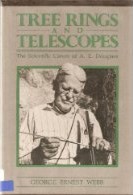
Crossdating Tree RingsTree Rings and Telescopes: The Scientific Career of A.E. Douglass
George E. WebbThu
Sep 7Paleo-Ecology and Climate Techniques Optional: Diamond: Packrat Historians
Optional: USGS: Repeat Photography
Optional: Dendro video, LTRR alumnus
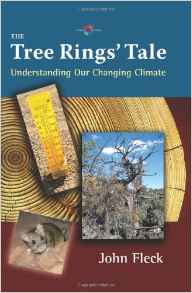
Optional: Sierra snowpack by tree ringsTree Rings' Tale
John Fleck
Changing Mile
Steven HannonTue
Sep 12SW Ecosystems: Deserts Optional: Buffelgrass Coordination Center
Optional: Geos. 195D website on buffelgrass
Optional: NGM 2013: Number of species worldwide
Optional: NGM 2013: Nitrogen in environment
Optional: PBS 2022: Saguaro cactus and climate changeTurn in (D2L) Activity 1: Crossdating Tree Rings
Begin studying for Quiz 2: SW Rivers
UA Library search engine
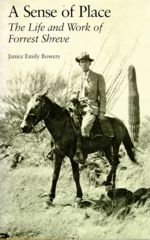
Check this out for AZ RiversA Sense of Place
Janice Bowers
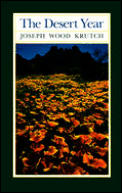
The Desert Year
Joseph Krutch
Desert Solitaire
Edward AbbeyThu
Sep 14SW Ecosystems: Mountains Required: Sky Islands video
Optional: Species extinction ratesThe Mountains Next Door
Janice Bowers
Ponderosa
Sylvester Allred
Tue
Sep 19In-class (online) review
Part I:
Southwest Background
Click here for study guide to Exam ITake Quiz 2 (D2L): SW Rivers Thu
Sep 21Making a video storyboard
Video making made easyHave some (at least 4) images downloaded, ready for practice
Download audio files from D2L, as neededHave Adobe Premiere Pro installed Thu
Sep 21Take-home Exam 1 open for submission on D2L Exam 1 due Fri, Sep 22, 5:00 PM, D2L Part II - Prehistoric Environmental Issues Date Topic Reading Class Events BOD Tue
Sep 26Deep-time history: Vegetation and climate history Optional: Landscape Changes in the Southwest
Optional: Story of Tucson's Past in Sediment. A Requiem for ArroyosThu
Sep 28Early Humans: Megafauna
ExtinctionRequired: Martin & Burney: Bring Back the Elephants
Optional: A graceful gazelle becomes a pest: an example of how exotic species introductions might go awry
Optional: La Brea Tarpits, 100th anniversary in 2013
Optional: Bering Land Bridge animation
Optional: Gomphothere-human site
Optional: Paul S. Martin homage UA
Optional: Paul S. Martin homage TW
Optional: Mammoth overkill led to warming?
Optional: Impact theory on the extinction
Optional: Clovis points
Optional: NGM 1979: In Search of First Americans
Optional: NGM 2010: Megafauna Extinctions Worldwide
Optional: NGM 1955: Ice Age Americans
Optional: NGM 1942: Ice Age animals
Optional: Sports Illustrated 1956: Lehner AZ mammoth kill
Optional: First Americans 2000
Optional: 2016: A mammal goes extinct due to climate changeBegin essay/video: Wolf Re-introduction to the SW Silent Sky
Allan EckertTue
Oct 3Ancestral Puebloan:
Chaco CanyonOptional: NGM 1955: Ice Age Hunters
Optional: Russell Cave: Lifeways of the Archaic period
Optional: Hopi corn farming (4-min. video)
Optional: Provenance study of Chaco timbers
Optional: 2015 provenance study of Chaco timbers
Optional: NGM 1921: Chaco #1
Optional: NGM 1922: Chaco #2
Optional: NGM 1923: Chaco #3
Optional: NGM 1925: Chaco #4
Optional: 2020: Megafauna to agriculture?Please look over the wolf module and ask questions today as needed New Light on Chaco Canyon, SAR Series
Collapse
Jared DiamondThu
Oct 5Ancestral Puebloan:
Mesa Verde and KayentaOptional: Mesa Verde video in 3-D (red & blue glasses needed, very cool!)
Optional: Vanishing in prehistoric American Southwest (3-min. video)
Optional: Haury 1958: Kayenta migration
Optional: NGM 1923: Tsegi Canyon, AZ
Optional: NGM 1979: Navajo National Monument, AZBegin preparing for Quiz 3: SW Cultural Geography Tue
Oct 10Hohokam Required: Where do the salts go? A 4-page, sobering description of soil salinization in Arizona
Required: Looking at Hohokam may help us live today: A rationale for studying past cultures.
Optional: Pueblo Grande Hohokam
Optional: How to Make a Hohokam pithouse
Optional: The Hohokam HeartlandTurn in wolf outline/storyboard The Hohokam: Ancient People of the Desert
SAR SeriesThu
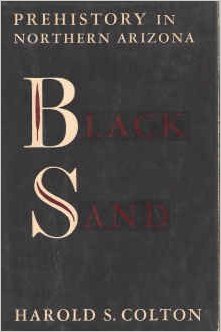
Oct 12Sinagua and Mogollon Optional: A special field trip to Wupatki (3-min. video) Black Sand
Harold ColtonTue
Oct 1714th & 15th Century Transition Optional: Report on 1927 1st Pecos Conference
Optional: NGM 1968: Casas Grandes, Mexico
Optional: Galisteo Basin, NM, Pueblo-IV sitesTurn back wolf outline/storyboard
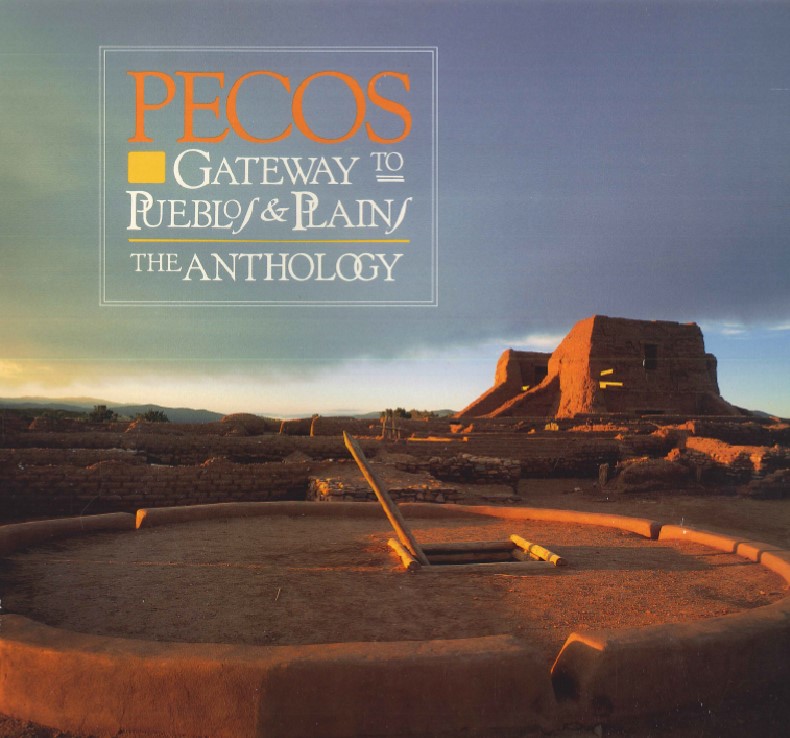
Start wolf essay/videoPecos: Gateway to Pueblo & Plains Thu
Oct 19Spanish Optional: NGM 1992: Spain in Americas, Map 1
Optional: NGM 1992: Spain in Americas, Map 2
Optional: NGM 2020: Bringing a vaccine to the AmericasMajestic Journey
Stewart Udall
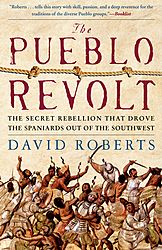
Pueblo Revolt
David Roberts
Guns, Germs, and Steel
Jared Diamond
Saving the World
Julia AlvarezFri
Oct 20Wolf "movie night":
Seton's Wolf Story,
a 45-minute PBS film,
an incredible story, told well in a good movieOnline 3:30 PM,
led by PaulTue
Oct 24Navajo-Apache Turn in wolf essay/video (D2L) Navajo Long Walk
Joseph Bruchac
Sing Down the Moon
Scott O'DellThu
Oct 26In-class (online) review Part II - Prehistoric Environmental Issues
Click here for a study guide to Exam IITue
Oct 31Start Exam II - Prehistoric Environmental Issues
Open showing of wolf videos, in class; come watchExam II due Wed, Nov 1, 5:00 PM, D2L Part III - Modern Environmental Issues Date Topic Reading Class Events BOD Thu
Nov 2Anglo-American arrival to SW Required: The Arroyo Problem in the Southwestern United States
Optional: NGM 2014: Eating meat in America
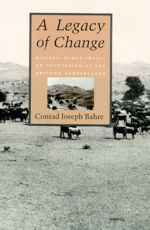
Critical Thinking: Taking Stock on GrazingKeep reviewing for Quiz #3: SW Human Geography Legacy of Change
Conrad Bahre
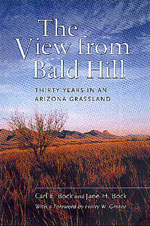
View From Bald Hill
Bock and Bock
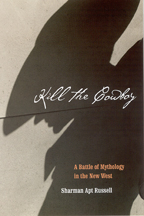
Kill the Cowboy
Sharman Apt RussellTue
Nov 7SW Forest Fire History Critical Thinking: NAm Fire-CO2 numbers
Optional: TED Talk on forest fire
Optional: 15-min. video on a fire lookout
Optional: Paul's video (13 min.) on a fire lookout
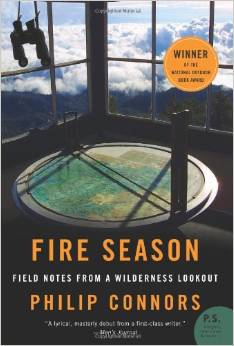
Optional: Paul's video (7 min.) on AZ White Mts., including 2011 Wallow FireFire Season
Philip Conners
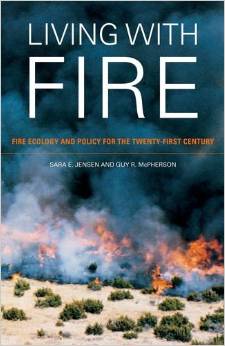
Living With Fire
Sara Jensen
Guy McPherson
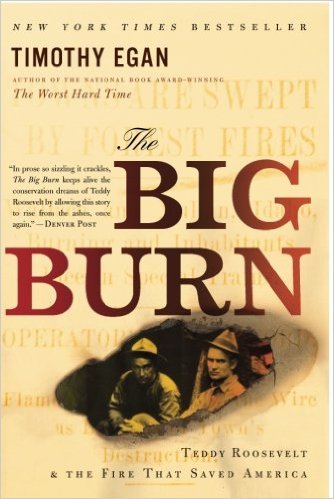
The Big Burn
Timothy Egan
On The Burning Edge
Kyle Dickman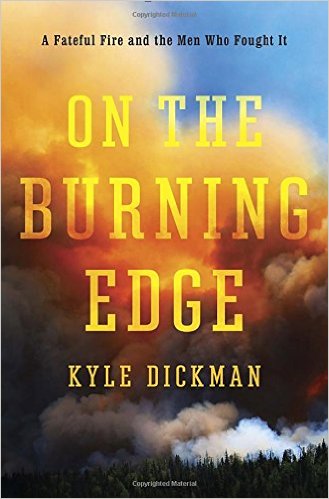
Thu
Nov 9SW Forest Health Optional: Importance of Forests (6-min. video) Take Quiz #3 (D2L): SW Human Geography
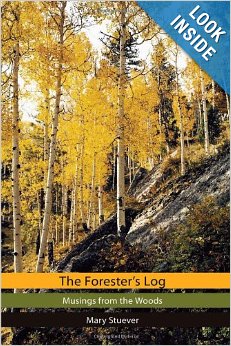
Begin Activity 2: Arizona State MuseumThe Forester's Log
Mary Stuever
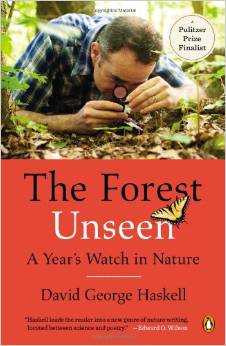
The Forest Unseen
David Haskell
The Quiet Crisis
Stewart Udall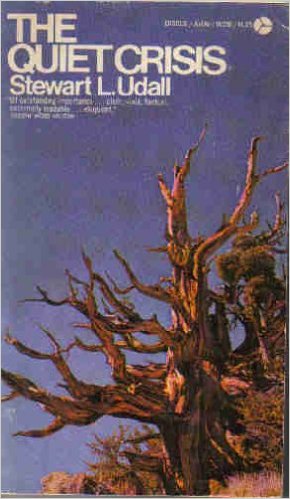
Tue
Nov 14SW Flooding Extra credit videos are due
(email or D2L a link)Floods, Drought, and Climate Change
Michael Collier
Robert Webb

Thu
Nov 16SW Drought Optional: Understanding and Defining Drought. From the National Drought Mitigation Center
Optional: Is "hoping environmental science to be wrong" good public policy? Arizona Daily Star, March 3, 2003.
Optional: North American Drought AtlasTurn in Activity #2:
Arizona State MuseumTue
Nov 21Global Change and the SW Required: Southwest may see warmer, wetter climate in the future
Optional: Sonoran Desert may be coming apart at the seams
Optional: Climate Change Effects on Southwest Water resources
Optional: Assessment of Potential Future Vegetation Changes in the Southwestern United States
Optional: Ecosystem Services: Benefits Supplied to Human Societies by Natural Ecosystems. A very readable "white" paper, 13 pages of text with pictures.
Optional: Glacier Retreat. A USGS report on retreating glaciers, perhaps evidence of "global warming."
Optional: Drought and Climate Change. From the National Drought Mitigation Center
Optional: Study predicts dust-bowl Southwest. Are we headed for serious environmental changes?
Optional: Op-ed on sustainability in the SW. Especially good for Business majors.
Optional: The Carbon Bathtub. A National Geographic model.
Optional: Climate Change. AZ Daily Wildcat.
Optional: Millennials Driving Less. Baltimore Sun.
Optional: NGM 2014: Coal.
Optional: CO2 emissions. Sobering numbers.
Optional: NGM 2016: Thoreau's plants flowering earlier.
Optional: NGM 2017: Global change, essential facts.
Optional: NGM 2020: COVID & Global change.
Optional: Planting trees to combat global warming?
Optional: CO2 emissions by cities (Tucson singled out here)
Optional: Trees not migrating fast enough
Critical Thinking: Comparing CO2 and methane.
Optional Critical Thinking: Cutting down on cow methane.Cartoon Intro to Climate Change
Yoram Bauman
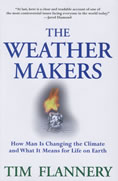
The Weather Makers
Tim Flannery
A Great Aridness
William DeBuys
Chasing Ice
James Balog
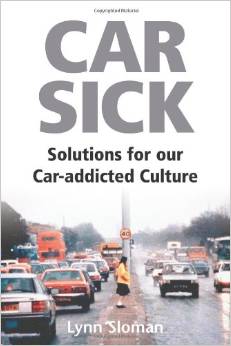
Car Sick
Lynn Sloman
Merchants of Doubt
video
Earth's Changing Climate
The Great Courses
Thu
Nov 23Thanksgiving Day, no classes Tue
Nov 28SW Water Required: ADWR: Arizona's Water Supplies and Water Demand
Required: ADWR: Tucson Active Management Area
Required: AZ Daily Star: 2007: Pumping of groundwater spurs surge in earth fissures
Follow-up: AZ Daily Star: 2017: Update on earth fissures in Arizona
Optional: Irrigate and die
Optional: 100th Meridian explained
Optional: Agriculture in AZ
Optional: AP report on water use in AZ
Optional: The Colorado River's Future
Optional: 2013: Endangered Colorado River
Optional: 2015: Colorado River Valuation
Optional: 2015: Stop evaporation!
Optional: 2016: The latest on water desalination
Optional: NGM 2016: Ogallala Aquifer
Optional: Saving water at home
Critical thinking: Economic impact of agricultureBegin reviewing for Quiz 4: SW Cultural Chronology Cadillac Desert
Marc Reisner
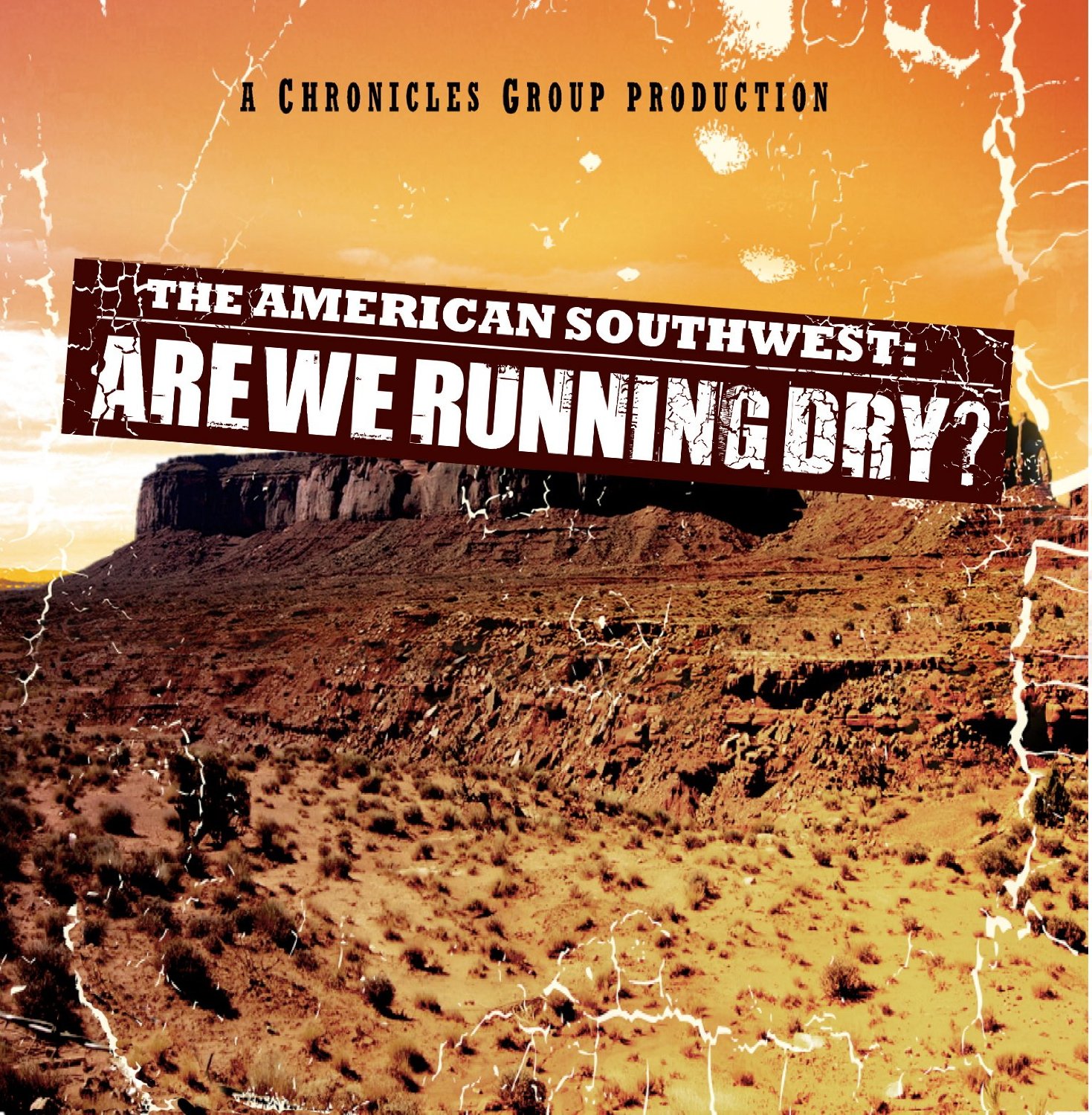
Video: Southwest, Are We Running Dry?
Emerald Mile
Kevin Fedarko
Colossus
Michael Hiltzik
The Water Knife
Paolo Bacigalupi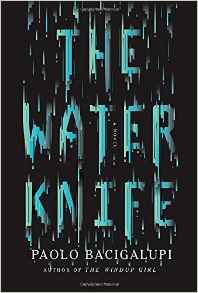
Thu
Nov 30In-class (online) review Part III - Modern Environmental Issues
Click here for a study guide to Exam IIITue
Dec 5Final Course Review
Optional: A summary of this course Student course evaluations
(now online)
Take Quiz #4 (D2L): SW Cultural Chronology
Re-survey of courseFinal Review Sessions and Final Exam Date Instructor Time Place Mon
Dec 11Final Exam: Part III plus a comprehensive section 3:30 - 5:30 online, take home,
submit by D2LSubject to Change
Information contained in this course syllabus, other than the grade and absence policy, may be subject to change with advance notice, as deemed appropriate by the instructor.
Laboratory of Tree-Ring Research, University of Arizona
Tucson, Arizona 85721 USA
Comments to Paul Sheppard: sheppard @ ltrr.arizona.edu
Copyright © 2000-2023, Laboratory of Tree-Ring Research, Univ. of Arizona
Revised — August 2023